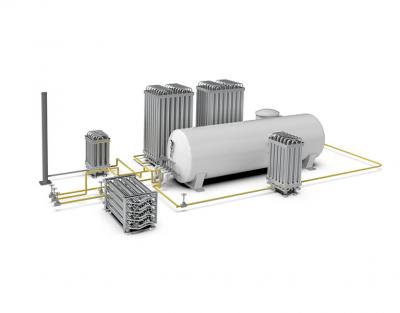
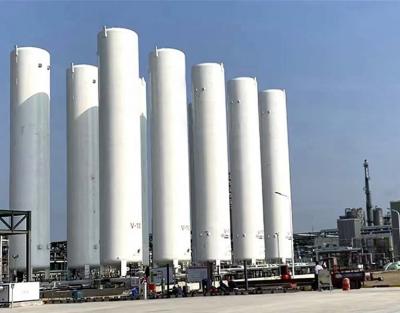
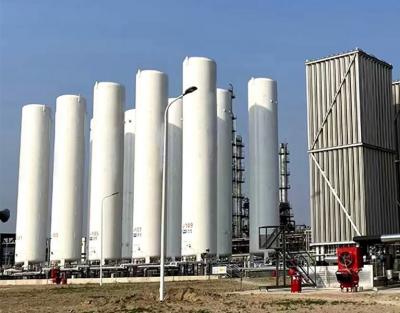
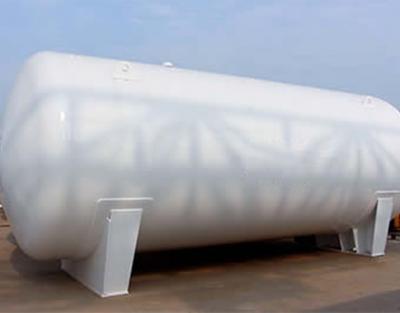
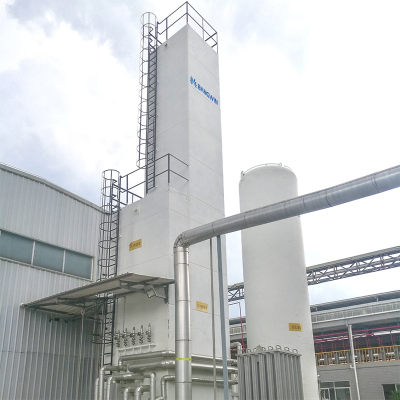
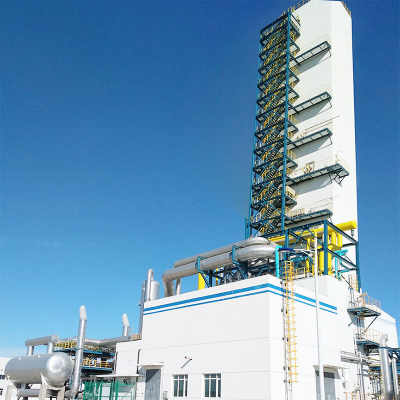
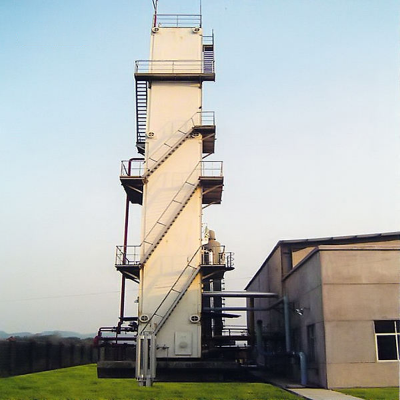
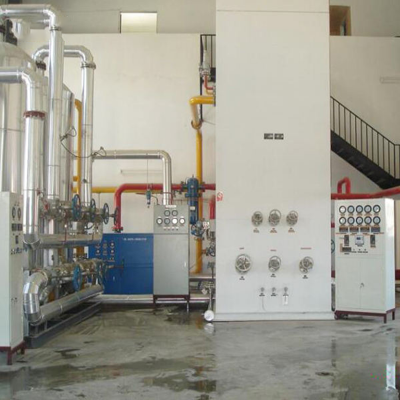
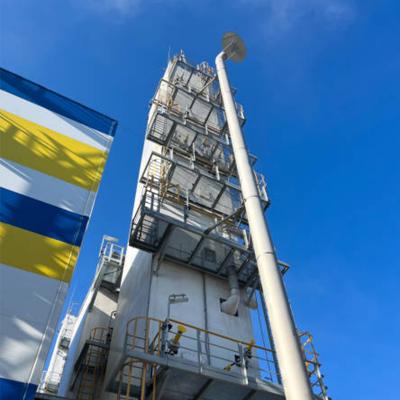
Liquefied natural gas (LNG) storage tanks are specialized products for storing LNG. They are special equipment, Class III pressure vessels, and undergo rigorous manufacturing processes including flaw detection, hydrostatic and pneumatic pressure testing, on-site inspection by the technical supervision bureau, and issuance of a pressure vessel inspection certificate. External rust removal and painting are also part of the manufacturing process. LNG storage tanks undergo strict quality assessments regarding the materials, dimensions, weld quality, operational quality, installation quality, internal devices, and safety accessories of pressure-bearing components. Routine physical and chemical tests are conducted on the tank materials, such as mechanical properties and chemical composition. Welded joints, welds, tank heads, and the geometric positions of various pressure-bearing components are rigorously inspected using X-ray non-destructive testing and magnetic particle testing. The product's sealing performance, pressure resistance, and all technical indicators that could affect its safe operation are also tested.
Ethylene (C₂H₅) is one of the world's most produced chemical products. Ethylene production is considered a key indicator of a country's petrochemical development level. With the rapid development of the national economy, my country's ethylene industry has grown rapidly, becoming the world's second-largest ethylene producer after the United States. The scale and demand for ethylene storage are also increasing, and ethylene storage tanks are now widely used.
Ethane storage tanks are cryogenic storage tanks. An ethane gas tank consists of a tank body, valves, pressure gauges, piping, and safety devices. These safety devices include safety valves, overflow valves, and explosion-proof devices to prevent accidents caused by excessive gas pressure or tank temperature.
Ethane Gas Tank Storage: Ethane gas tanks must be stored in a dry, well-ventilated location, away from heat sources and flammable or explosive materials. The tank body should have markings and warnings to help people identify the type of ethane gas tank and safety precautions.
Ethane Gas Tank Transportation: During the transportation of ethane gas tanks, it is necessary to maintain the normal temperature and pressure of the tank and avoid leaks or vibrations. During the transportation of ethane gas tanks, relevant regulations and standards must be strictly followed, and appropriate safety measures must be taken to ensure safe transportation.
Ethane Gas Tank Use: When using ethane gas tanks, a dedicated gas regulator must be used, and the correct installation and use of the regulator must be ensured. When using the gas, avoid inhaling or contact with ethane gas to prevent accidents or accidental poisoning.
Methane storage tanks are devices used to store methane gas and are widely used in the energy and chemical industries. Methane is a colorless, odorless, and non-toxic natural gas, primarily composed of methane (CH4), and is an important fuel resource.
Methane is a common natural gas, and it is also a flammable and explosive gas. Under normal conditions, methane is a colorless, odorless, and non-toxic gas, but it has high flammability and explosiveness. Therefore, special care must be taken during storage and transportation to avoid harm to human health and the environment.