-
WhatsApp / Mob : +86 156 5177 2521
-
Email : mrwin@cnbangwin.com
WhatsApp / Mob : +86 156 5177 2521
Email : mrwin@cnbangwin.com


Categories
Latest blog
Tags
Nitrogen Liquefaction Plant: Complete Guide to Liquid Nitrogen Production Systems
Jun 26 , 2026 Nitrogen Liquefaction Plant Basics
For instance, a nitrogen liquefaction plant turns gaseous nitrogen into liquid nitrogen with the help of cryogenic cooling technology. The nitrogen temperature of the system is lowered to about − 196 ° C, due to which nitrogen goes from gas state to liquid state.
In many industries, it is for cooling, freezing, storage and Inerting applications. Consequently, more and more companies get involved in on-site liquefaction systems. Additionally, in-situ manufacturing enhances supply security and minimizes transportation expenses.
Today's nitrogen liquefaction plants ensure high efficiency and sustainable liquid nitrogen production.
Cryogenic Air Separation Plant
Cryogenic Air Separation Equipment
There are advantages of liquid nitrogen over gaseous nitrogen.
For starters, liquid nitrogen takes up less space.
It also makes it easier for routing and distribution.
Moreover, liquid nitrogen delivers high-rate cooling.
Additionally, there are industries that use cryogenic temperatures in their processes.
That is why the nitrogen liquefaction technology has a decision-making function in modern manufacturing.
N2 liquefaction plant: A nitrogen liquefaction plant is based on refrigeration cryogenic cooling technology.
It feeds the system with high-purity gaseous nitrogen first.
Then, compressors increase nitrogen pressure.
Then, the heat exchangers lower gas temperature.
At the same time, refrigeration energy is produced using expansion turbines.
The system then sub-cools nitrogen through several stages.
Finally nitrogen achieves its liquefaction temperature and goes to storage tanks.
As a result, the plant generates a continuous flow of liquid nitrogen.
There are a few key components to allow this to run efficiently.
l Nitrogen Supply System
It takes the nitrogen from a PSA Generator or Air Separation unit.
As a result nitrogen purity directly impacts performance.
l Nitrogen Compressor
Compression The compressor pressurizes nitrogen before cooling.
Thus, liquefaction process runs more effectively.
l Heat Exchanger
The heat exchanger has a good transfer performance of cooling energy.
Additionally, it always increases energy efficiency.
l Expansion Turbine
The turbine creates cryogenic refrigeration.
As a result, the system cools down to temperatures that are nearly absolute zero.
l Cryogenic Cold Box
Critical refrigeration equipment is contained within the cold box.
Furthermore, it minimizes heat leakage.
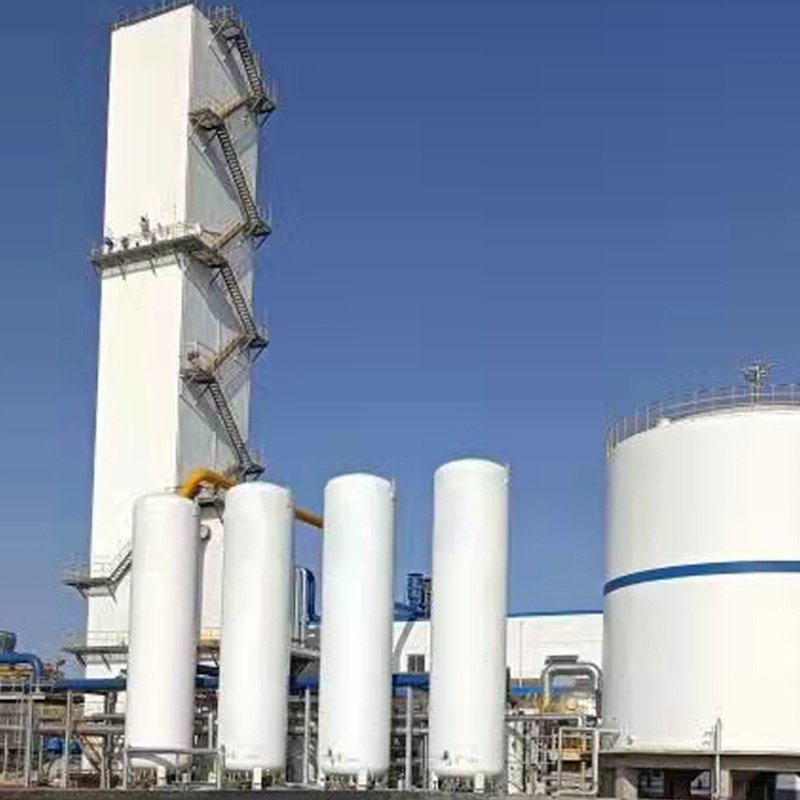
l Liquid Nitrogen Storage Tank
Then, liquid nitrogen is safely stored into a storage tank.
This way, LN2 availability to the users has no restriction of time.
Cryogenic Air Separation Equipment
LCO2 Storage Tank
This process of liquefaction comes in different phases.
Step 1: Nitrogen Supply
High purity nitrogen gas is fed into the system
Step 2: Compression
Compressors increase gas pressure.
Step 3: Pre-Cooling
Nitrogen is cooled by heat exchangers.
Step 4: Expansion Cooling
Expansion turbines create additional refrigeration.
Step 5: Deep Cryogenic Cooling
The system chill to liquefaction temperatures
Step 6: Liquefaction
Nitrogen transforms into liquid form.
Step 7: Storage
Finished liquid nitrogen is stored in storage tanks.
This provides users with a dependable supply of LN2.
Various Industries need various manufacturing capabilities.
l Small Nitrogen Liquefaction Plants
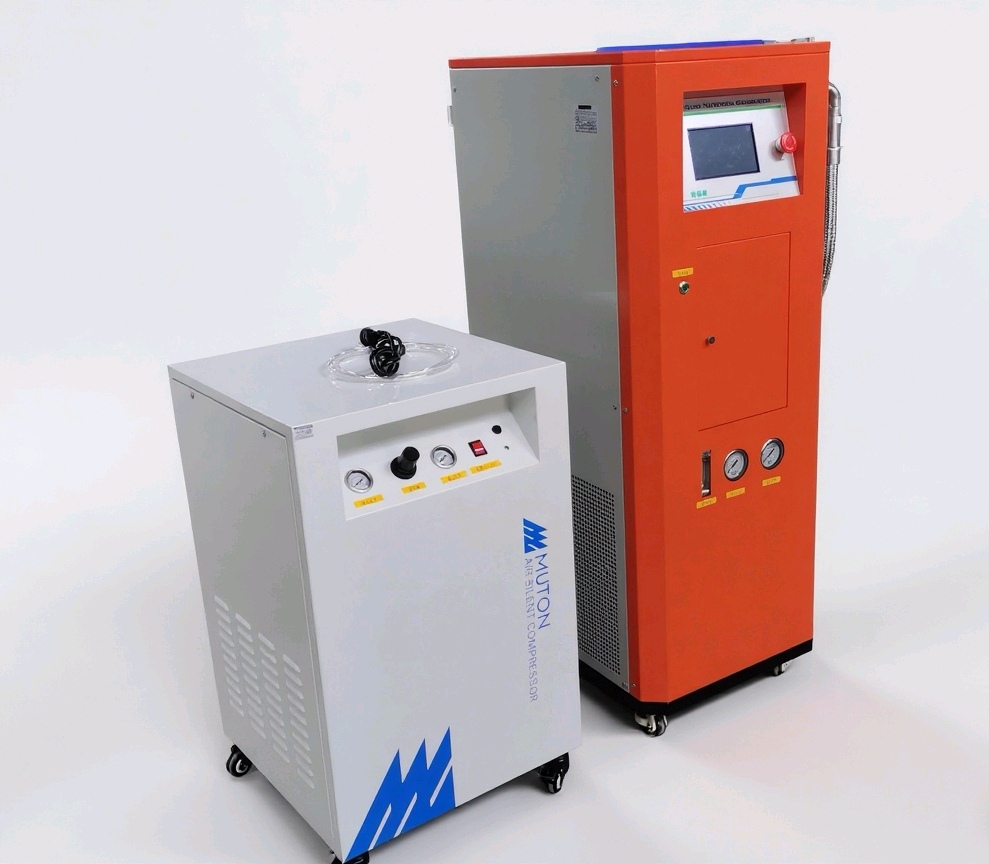
Laboratories and research facilities these small systems are appropriate.
In addition, they need very little installation room.
l Medium-Capacity Systems
These systems assist with pharmaceutical companies, and food manufacturers.
Furthermore, they offer excellent flexibility.
l Large Industrial Plants
Bulk facilities support gas suppliers and large industries
Hence, they invariably manufacture large quantities of liquid nitrogen.
A nitrogen liquefaction plant is beneficial, and that is why many companies like to choose a nitrogen liquefaction plant.
l Continuous Liquid Nitrogen Supply
The facility runs 24-7, generating liquid nitrogen.
It thus reduces the likelihood of disruptions to production.
l Reduced Transportation Costs
Firms diminish reliance on external providers.
Consequently, we have less logistics costs.
l Higher Storage Efficiency
Liquid nitrogen as it needs less space to store.
Moreover, it simplifies inventory management.
l Greater Operational Independence
With nitrogen production controlled by the users.
Thus, they avert supply chain disruptions.
l Long-Term Cost Savings
Regularly buying gas is eliminated by on-site production.
Consequently, companies improve profitability.
Numerous industries are served by a nitrogen liquefaction plant.
l Food Processing
It is the liquid nitrogen that manufacturers use to perform flash freezing.
Moreover, freezing preserves product quality.
l Healthcare
Hospitals keep biological samples under liquid nitrogen.
l Pharmaceutical Industry
Vaccine and Research Material Preservation — Companies
l Electronics Manufacturing
Manufacturers use coolers while producing sensitive components.
l Metal Processing
Liquid nitrogen enables shrink fitting and cryogenic treatment.
l Chemical Industry
Liquid nitrogen is used in inerting applications at chemical plants.
Thus, liquid nitrogen still plays a crucial role in several sectors.
Many buyers compare these technologies.
|
Feature |
Nitrogen Liquefaction Plant |
PSA Nitrogen Generator |
|
Product Form |
Liquid Nitrogen |
Gaseous Nitrogen |
|
Storage Density |
High |
Lower |
|
Initial Investment |
Higher |
Lower |
|
Production Capacity |
Medium to Large |
Small to Medium |
|
Cryogenic Applications |
Excellent |
Limited |
|
Transportation Savings |
Significant |
Moderate |
Several factors influence project costs.
l Production Capacity
Larger plants require larger equipment.
Therefore, capital investment increases.
l Nitrogen Purity
More sophisticated refrigeration systems are often necessary for higher purity.
l Energy Consumption
Efficient designs reduce operating costs.
Additionally, energy efficiency has an impact on profitability over the long term.
l Automation Level
Advanced controls improve plant performance.
I did really, though, fix up a middle-class side of not starting with the second.
l Storage Requirements
Invest in larger storage tanks
That means leg scope influences overall cost.
Selecting the appropriate solution involves thorough preparation.
First, determine liquid nitrogen demand.
Next, identify purity requirements.
Moreover, evaluate available installation space.
Furthermore, consider future production growth.
At last, choose a supplier with huge industry experience.
It is clearly where professional engineering support becomes required.
Nanjing Bangwin Gas Industrial gas generation and cryogenic technologies
Official Website:
The company supplies:
l Cryogenic Air Separation Plant
l Liquid Oxygen Plant
On top of that, Nanjing Bangwin Gas offer customized engineering services.
In addition, the company also provides installation assistance and technical training.
This ensures that customers are provided with gas production systems that are energy-efficient and reliable.
These are the places for cryogenic storage tanks and gas cylinders:
https://bangwingascylinder.com/
l What is nitrogen liquefaction plant?
A nitrogen liquefaction plant is referred to as a industrial gas or cryogenic vessel, which cryogenically cools gaseous nitrogen into liquid nitrogen.
l What temperature does nitrogen liquefy?
At atmospheric pressure, nitrogen hybridizes into liquid at around -196 °C.
l Give the industries, which use nitrogen liquefaction plant?
These systems are used by food processing, health care, pharmaceutical, electronics and chemicals and research estates.
l PSA Nitrogen Generator supply for a liquefaction plant?
Yes. On many liquefaction systems, the nitrogen source is PSA nitrogen generators.
l What is the cost of a nitrogen liquefaction plant?
The cost varies greatly based on capacity, purity requirements, automation levels and storage capability.
l Why choose Nanjing Bangwin Gas?
Nanjing Bangwin Gas specializes in researching and developing cryogenic bits;providing customized products,highly reliable equipment and complete technology support.
An on-site nitrogen liquefaction plant offers a highly efficient alternative method of producing liquid nitrogen.
Additionally, it enhances the reliability of supply and lowers transportation costs. It also provides more flexibility for industries needing cryogenic nitrogen.
As a result, today several companies deploy nitrogen liquefaction technology to cement their business.
With Nanjing Bangwin Gas you can count on global customers for advanced liquid nitrogen solutions. The company provides tailored engineering, dependable equipment and professional services for industrial gas projects around the globe.
Learn more at https://bangwingas.com/.



 IPv6 network supported